
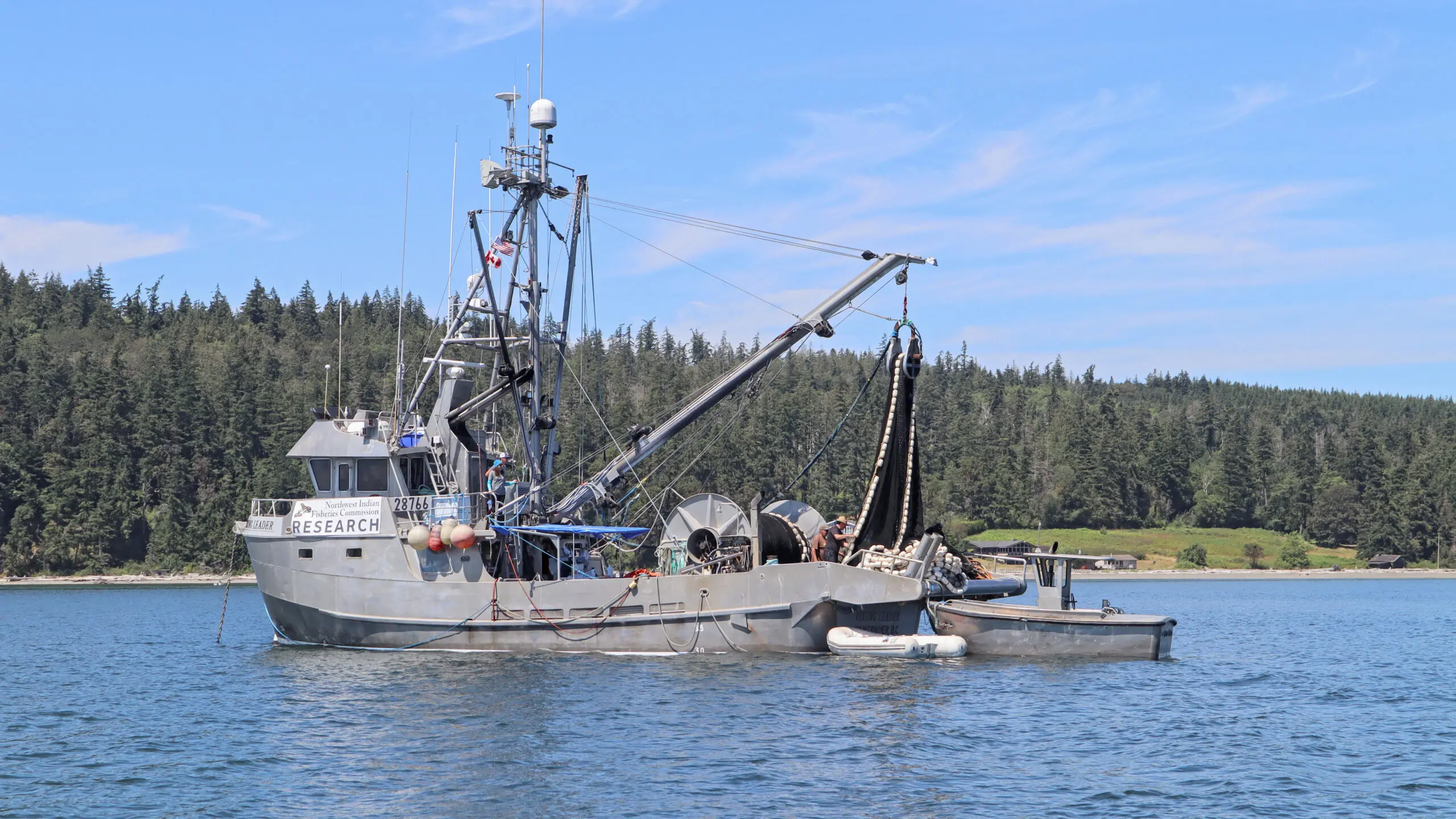
200 Nautical Miles, One Mission: Salmon Survival
Heading into their sixth year, the Puget Sound Juvenile Salmon Offshore Monitoring team is setting off on their annual two-week effort this month. The team, led by the Tulalip Tribes, in partnership with Long Live the Kings and the U.S. Geological Survey, has a mission to better understand what controls marine survival for salmon in Puget Sound.
The survey spans more than 200 nautical miles, targets marine waters at the mouth of more than 10 major watersheds, and gathers valuable information on the health about four salmon species, including more than 20 Chinook runs.
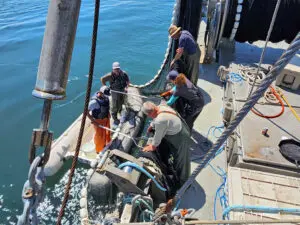 “Nothing can replace being out on the water and getting a glimpse of the real-time conditions that the salmon experience,” said Liz Duffy, Associate Director of Science for Long Live the Kings.
“While some things are reassuringly consistent, each year brings its own story and surprises. I’m especially curious to have the salmon tell us how this year’s warmer marine waters and low snowpack have affected them.”
The research team collects data on the distribution, size, and health of young salmon as well as essential details about their diets and food supply. To help understand how ocean conditions are affecting salmon, they also collect environmental data such as water salinity and temperature.
Using non-lethal methods, they collect samples of salmon stomach contents to understand what the fish are eating. A sample full of energy-dense fish, like Pacific herring, is an indicator of a robust food supply.
“As we learned in the Salish Sea Marine Survival Project, the key to improving marine survival for salmon is tied to a healthy and productive Puget Sound,” said Duffy.
“Long-term monitoring programs like this one are critical because they uncover links between salmon survival and marine conditions, relationships which are complex and variable. Ultimately, our goal is that information from this monitoring program will be used to improve salmon management and recovery efforts.”
Gaining an understanding of the needs of salmon and steelhead is paramount to preserving and supporting them as the keystone of our Pacific Northwest ecosystems. Knowing what areas are essential for restoration is just as important as the work that takes place.
In a changing climate, it is more important than ever that monitoring projects like this continue so we can help the salmon we all love have the best possible chance of survival.