
Learning What Salmon Need to Survive in Puget Sound
How do scientists study salmon?
Truly understanding the health of salmon populations requires examining their entire life cycle. This means investigating the environments they travel through, what they eat, where they migrate, and the obstacles they encounter along the way.
This is especially important as climate change and shifting marine conditions affect the ecosystems salmon depend on. The Offshore Monitoring Program helps fill a key knowledge gap by studying juvenile salmon, their food sources, and their environment as they migrate through Puget Sound toward the ocean.
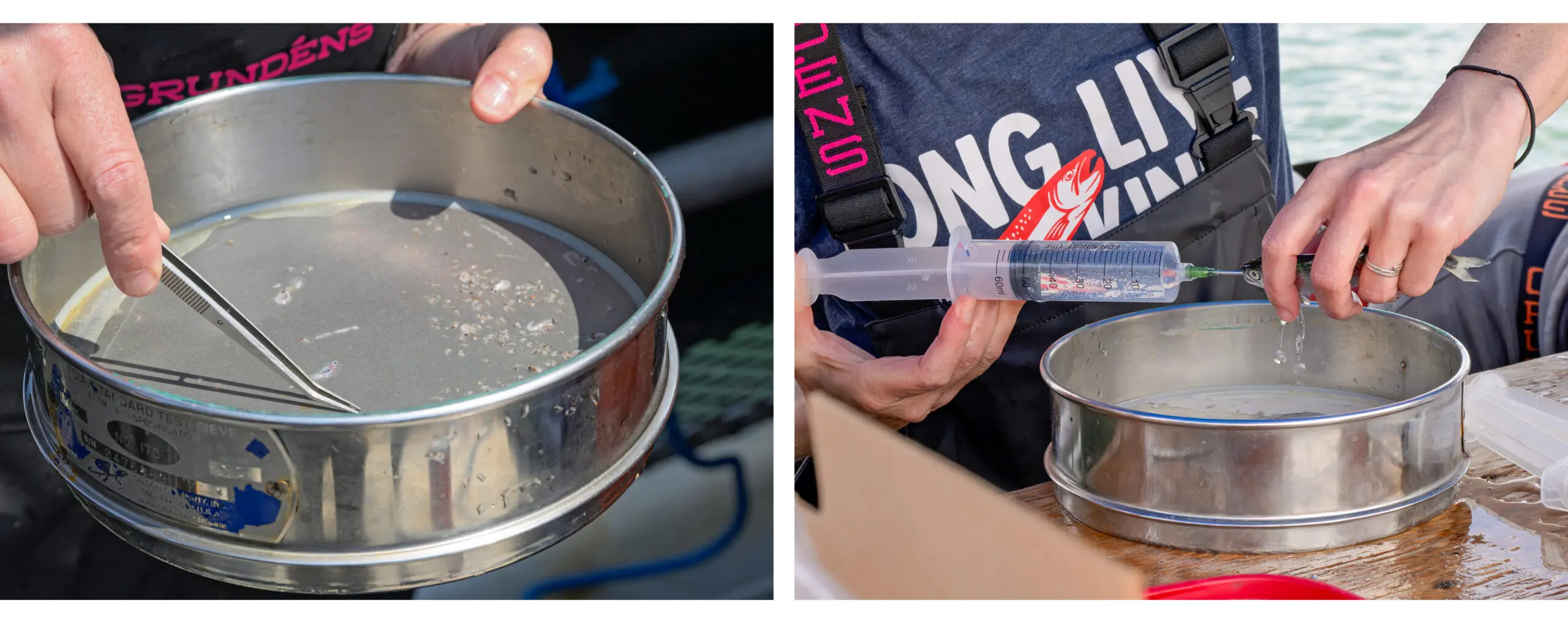
Researchers perform gastric lavage to collect stomach contents from juvenile salmon and learn what they are eating.
Why is Monitoring Vital?
Monitoring helps scientists understand how salmon populations and their environments change over time. By comparing data across years, researchers can investigate patterns linking factors like environmental conditions and food availability to salmon survival. For example, comparing years with different ocean temperatures or prey availability may help explain why juvenile salmon fare better in some years than others.
As the dataset grows, researchers can more easily identify indicators of ecosystem health and improve forecasts that support salmon recovery and management. Comparing findings across years and watersheds can also help scientists pinpoint problem areas and find clues to what the problems are. Monitoring also helps researchers identify important marine habitats. Salmon from multiple watersheds may congregate in shared areas of Puget Sound, sometimes far from the rivers and streams where they were born. Understanding where these fish gather can help identify habitats important to their survival.
This information can help guide habitat restoration and improve its impact. Comparing observations collected before and after restoration can help researchers assess changes in habitat use and environmental conditions, directing future restoration priorities. By building a consistent record of salmon along with the ecosystems they depend on, the Offshore Monitoring Program helps scientists and managers make more informed conservation decisions.
What are we studying and where?
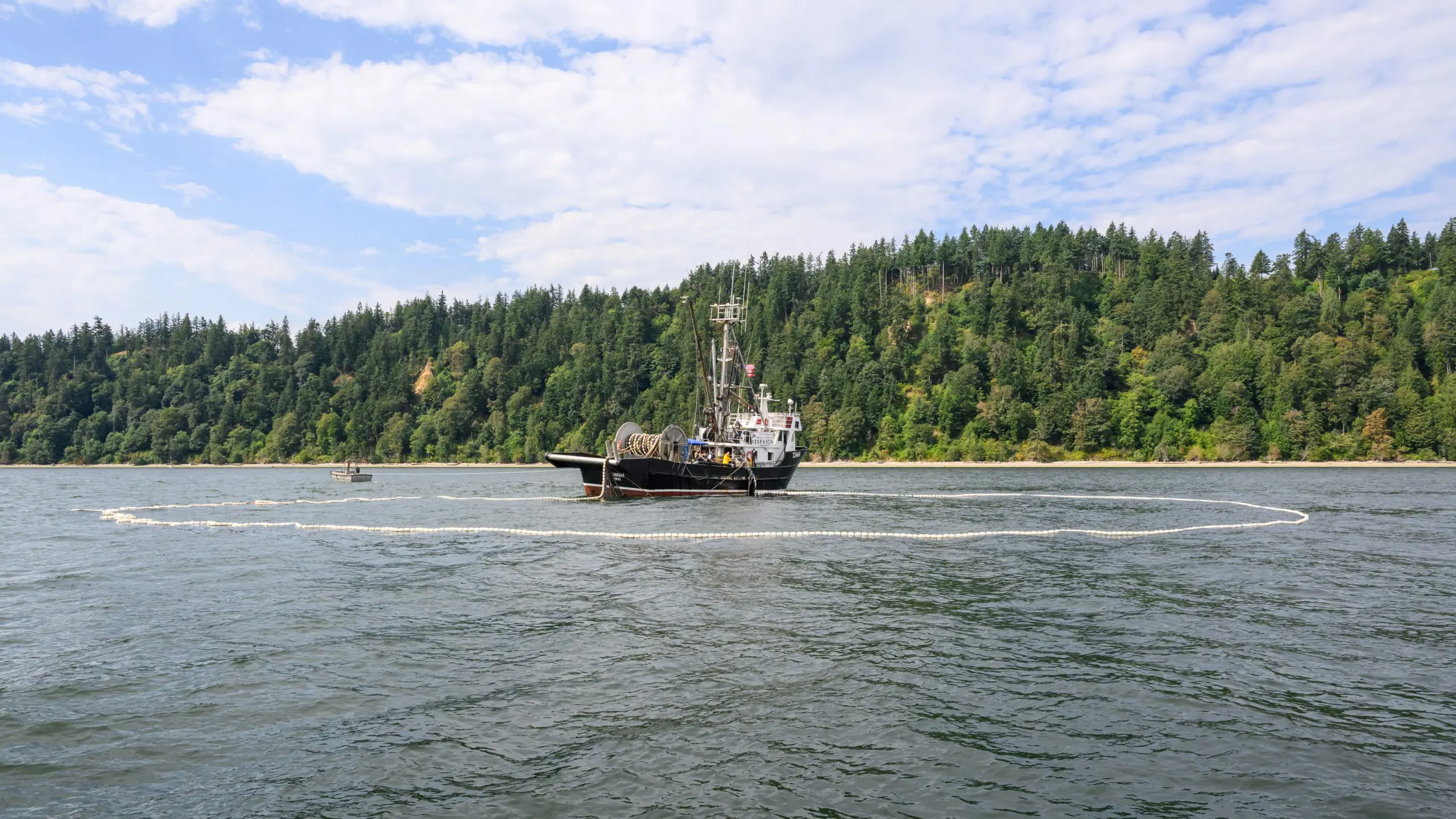
For two weeks each summer, researchers visit up to 21 sampling locations stretching from northern WA and the San Juan Islands to southern Puget Sound and Hood Canal. They collect information on juvenile salmon from more than 10 watersheds, along with data on their food sources and the surrounding marine environment.
The project is like an annual health checkup for the marine ecosystem. By returning to sampling locations and collecting data over time, researchers can compare fish populations, food availability, and environmental conditions to better understand how juvenile salmon are faring. A large net called a purse seine is used to capture fish. Deployed from a large offshore fishing vessel, the net encircles fish before its bottom is drawn closed, much like the drawstring of a bag. The captured fish are then brought aboard for sampling.
Fish are carefully sorted into containers equipped with bubblers to maintain oxygen levels while data such as length and weight are recorded. Researchers perform gastric lavage, a non-lethal technique, to collect stomach contents and learn what the fish have been eating. They collect scales and sometimes otoliths (ear bones) to uncover information about a fish’s age and growth history. Researchers also look for markings and tags, and collect genetic data, to help identify the population and watershed of origin for Chinook and coho salmon.
To better understand the food supply, researchers collect zooplankton, the tiny floating animals that are an important foundation of the marine food web, as well as the main diet of juvenile salmon. Forage fish, such as Pacific herring, are another important food source for salmon. By studying salmon alongside their prey while recording environmental conditions such as water temperature, researchers can investigate how changes in the marine ecosystem may affect salmon growth and survival.
Challenges with Offshore Monitoring
One of the biggest challenges with long-term monitoring is that a single year of data rarely tells the whole story. Salmon survival and marine conditions naturally vary from year to year.
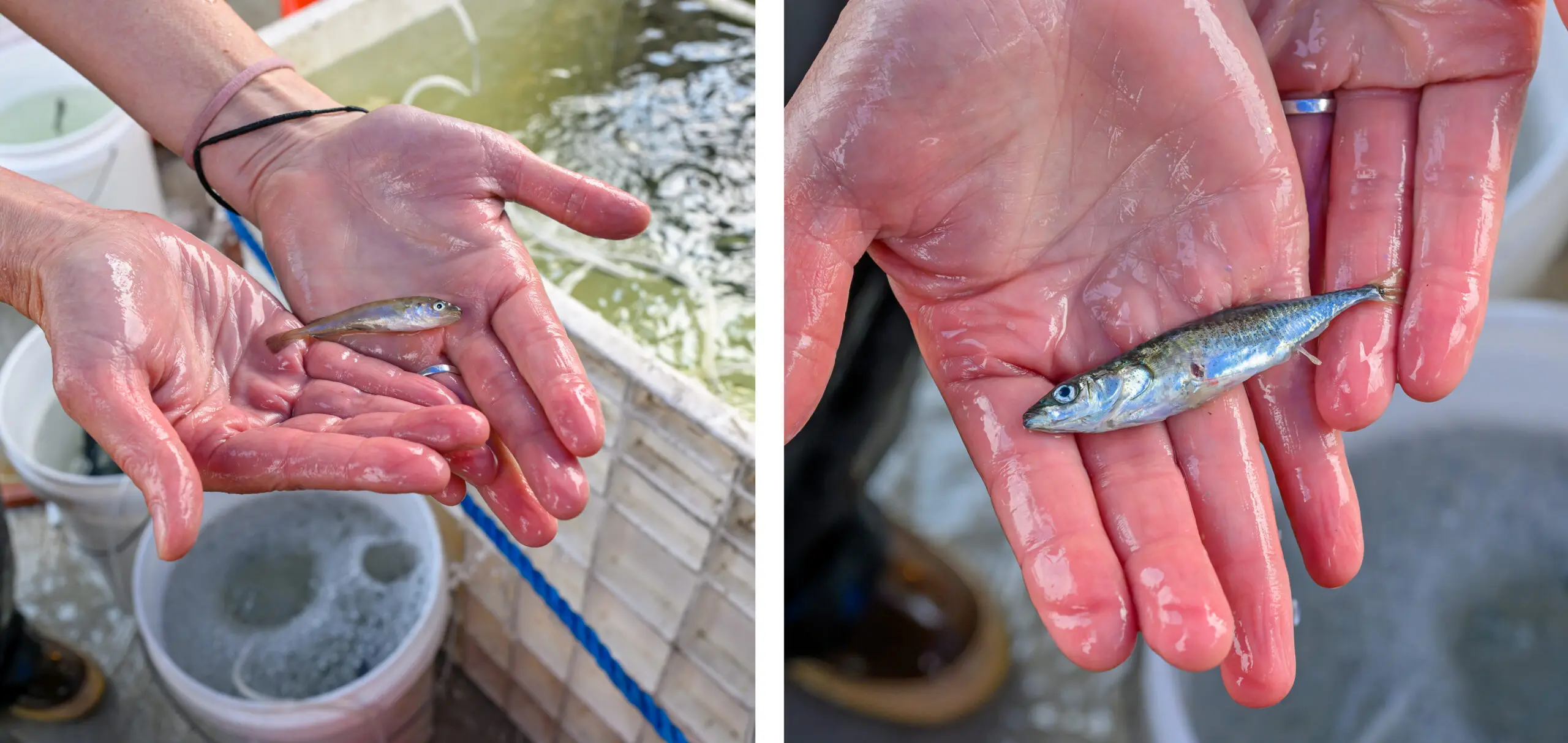
Researchers also record information on salmon’s food sources. Left Photo: juvenile walleye pollock; Right Photo: three-spine stickleback.
Consistent monitoring over many years is needed to create a stronger foundation for detecting patterns and identifying the factors that drive salmon survival. Maintaining that continuity needs sustained funding, as it can take a decade or more to collect enough data to identify useful patterns and trends.
The program completed its sixth year in July 2026, and funding for the 2027 survey has been secured. But beyond that, funding is uncertain. The experienced program staff is used to having to overcome obstacles ranging from boat trouble, unpredictable weather conditions, and even global pandemics. Securing reliable funding is undoubtedly the biggest obstacle.
Research and monitoring salmon in rivers and streams happens in a more confined space. Natural bottlenecks make gathering data more accessible. Monitoring offshore marine waters, like Puget Sound, involves efficiently sampling populations dispersed across a large area, while contending with weather, currents, and tides, and factoring in often extensive travel times between sample locations. This can make marine monitoring more challenging and highlights the importance of experienced, well-designed programs that can produce consistent high-quality information.
Coming Together and Sharing Knowledge
Preserving salmon populations can’t be done in isolation. Bringing together data from all parts of the life cycle is key to having a fuller picture of what salmon need. The Offshore Monitoring Program helps fill that gap by capturing what is happening in Puget Sound while juvenile salmon are undergoing their migration out to the Pacific Ocean. This collaborative effort, led by the Tulalip Tribes, with support from Long Live the Kings and the U.S. Geological Survey, is building the knowledge needed to inform salmon recovery in a changing environment.